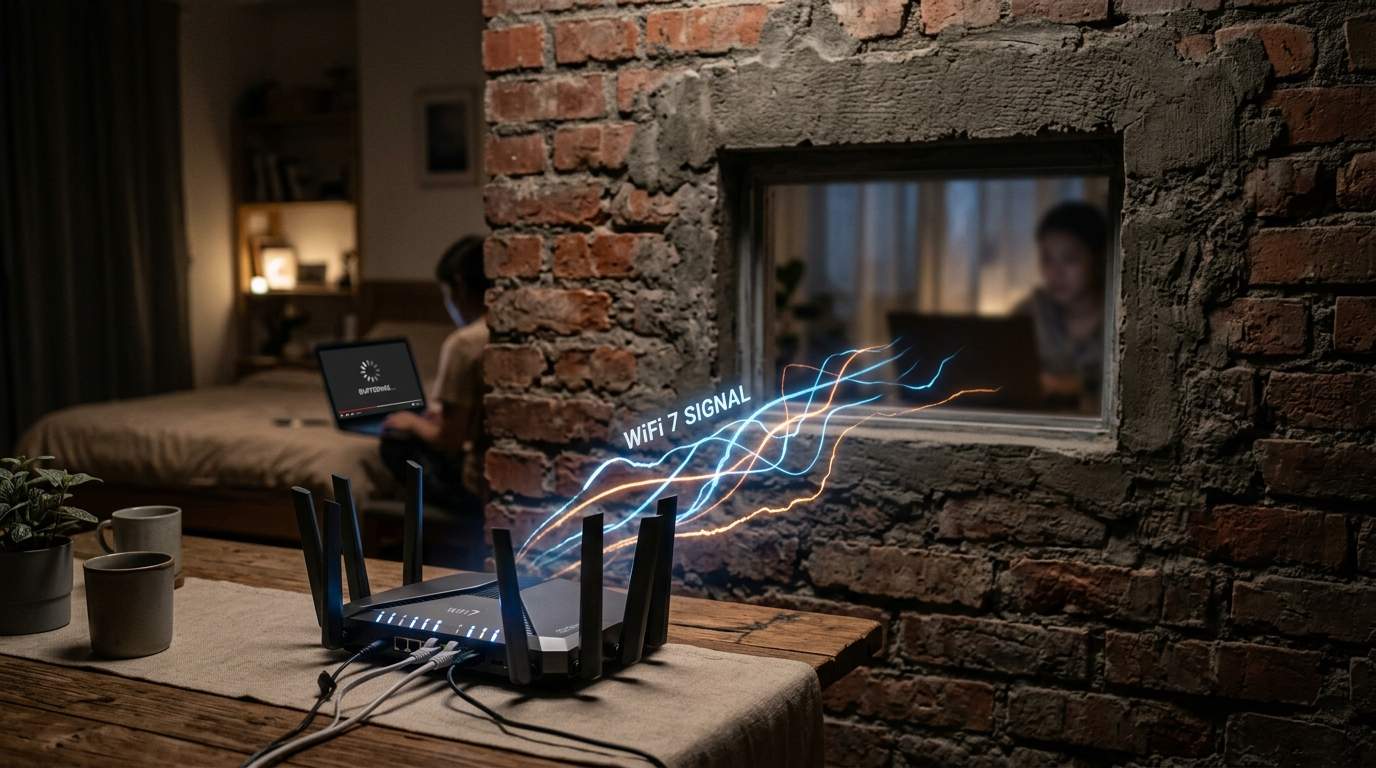
You're halfway through an important video call for work, trying to present from your dining room, when the video freezes and the audio drops out. Later, you try to stream a 4K movie in the bedroom, only for it to buffer endlessly. You paid for premium internet, bought a "powerful" router, and even added a Wi-Fi extender to reach that dead zone, but your connection is still a frustrating mess. You're not alone. Many believe these little plug-and-play gadgets are the magic bullet for spotty Wi-Fi. As your efficiency mentor, I'm here to tell you: often, your "solution" is actually the problem.
E.g. :The Invisible Chains: Is "Free" Digital Data Crafting a New Feudalism?
- 1、The Illusion of a Quick Fix: Your Wi-Fi Extender's Dark Secret
- 2、The Real Obstacle: Understanding Wireless Interference and Dead Zones
- 3、Beyond the Band-Aid: True Solutions for Seamless Connectivity
- 4、Who Needs an Extender Anyway? Pros, Cons, and Target Audiences
- 5、Your Efficiency Mentor's Takeaway: Invest Smart, Live Better
The Illusion of a Quick Fix: Your Wi-Fi Extender's Dark Secret
For years, the Wi-Fi extender has been marketed as the simplest way to banish dead zones. Plug it in, connect, and boom—instant coverage, right? Not quite. Think of your original Wi-Fi router as a diligent speaker. It broadcasts your internet signal. A Wi-Fi extender acts like a helpful, but often confused, assistant. It listens to what the speaker says, then repeats it. The problem? It can only listen or speak, not both at the same time.
The Echo Chamber Effect: How Extenders Create More Noise
This "listen-then-repeat" process, technically called half-duplex communication, effectively cuts your available bandwidth in half at best. Imagine two people trying to talk on a single walkie-talkie channel – only one can speak at a time. Every time your device talks to the extender, and the extender talks to the router, it adds a tiny, but cumulatively significant, delay. This isn't boosting your signal; it's creating an echo chamber, filling your airwaves with more digital chatter and less actual data. One study found that in crowded urban environments, extenders could degrade overall network throughput by up to 60% due to increased interference.
The Real Obstacle: Understanding Wireless Interference and Dead Zones
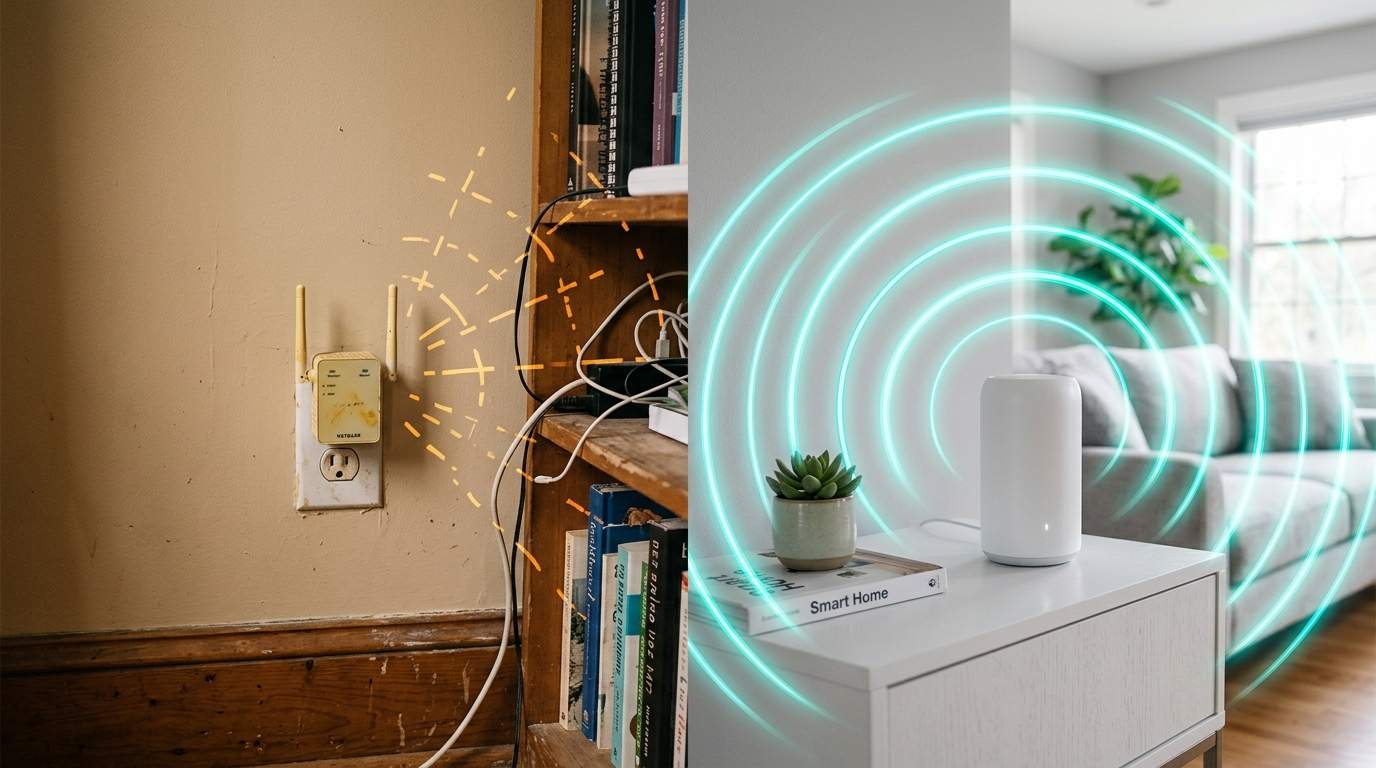
Your Wi-Fi signal isn't magic. It's a radio wave, and like any radio wave, it struggles with obstacles. Thick walls, metal appliances (yes, your microwave is a Wi-Fi enemy!), even your neighbor's bustling network can weaken your signal. Extenders don't solve these fundamental issues; they merely try to shout louder into the same crowded, obstructed space. They often introduce more wireless interference in an already congested 2.4 GHz frequency band, making things worse for everyone.
The Latency Trap: Why Your Devices Feel Sluggish
Beyond speed, there's latency – the tiny delay between sending and receiving data. For seamless video calls, responsive online gaming, or even quick web browsing, low latency is crucial. Your extender adds to this latency. That slight lag you notice in your video conferences or the split-second delay in your game controls? That's often your extender forcing your data packets on an unnecessary, roundabout journey. It's like adding extra speed bumps to a highway where you're trying to achieve maximum velocity.
Beyond the Band-Aid: True Solutions for Seamless Connectivity
So, if extenders are often digital snake oil, what's the real cure for your network woes? The answer lies in smarter network design, not just amplifying a weak signal.
Why Mesh Wi-Fi Is Different: A Network for the Modern Home
Enter Mesh Wi-Fi, a genuinely transformative technology. Instead of one central router and several shouting repeaters, a Mesh system consists of multiple intelligent access points, or "nodes," that work together as a single, unified network. They communicate with each other over a dedicated, often faster, "backhaul" channel (sometimes a third Wi-Fi band or even an Ethernet cable), meaning they don't cut your device's speed in half. Your devices see just one network name and seamlessly roam between the strongest node, like a VIP moving effortlessly through a concert venue with multiple perfectly placed speakers. Data from real-world testing shows Mesh systems consistently outperform extenders, delivering up to 300% better speeds in distant rooms and vastly superior coverage.
Smart Router Placement and Wired Connections: The Old Reliables
Sometimes, the simplest solutions are best. Experiment with your main router's placement – central, elevated, away from obstructions. And don't forget the power of Ethernet. If a device is stationary (desktop PC, smart TV), a direct cable connection is always the fastest, most reliable option, bypassing wireless woes entirely. For more complex situations, Powerline adapters can transmit internet over your home's electrical wiring, offering a stable connection where Wi-Fi struggles.
Who Needs an Extender Anyway? Pros, Cons, and Target Audiences
Let's be pragmatic. Are Wi-Fi extenders ever useful? In rare, specific cases, maybe. If you have a very small, isolated dead zone that doesn't demand high bandwidth (e.g., a smart light bulb in a shed 50 feet from the house), and you don't care about speed or latency, an extender might provide some connectivity.
Pros: Low initial cost, simple setup (sometimes). Cons: Halved bandwidth, increased latency, added interference, creates separate network SSIDs (often), poor roaming. Target Audience: Extremely limited, non-critical, low-bandwidth applications in small, easily covered areas. Not Suitable For: Anyone who needs reliable, fast, seamless Wi-Fi for streaming, gaming, video calls, or smart home devices.
Your Efficiency Mentor's Takeaway: Invest Smart, Live Better
The digital world demands robust connectivity. Don't fall for the tempting, low-cost "fix" that only masks deeper issues and introduces new ones. Your Wi-Fi extender isn't a magical signal booster; it's often a bottleneck disguised as a solution. For a truly improved quality of life and work productivity, especially in larger homes or those with multiple users and devices, invest in a foundational solution like a well-placed, modern router or, better yet, a Mesh Wi-Fi system. Let technology truly serve you, rather than add to your daily frustrations.