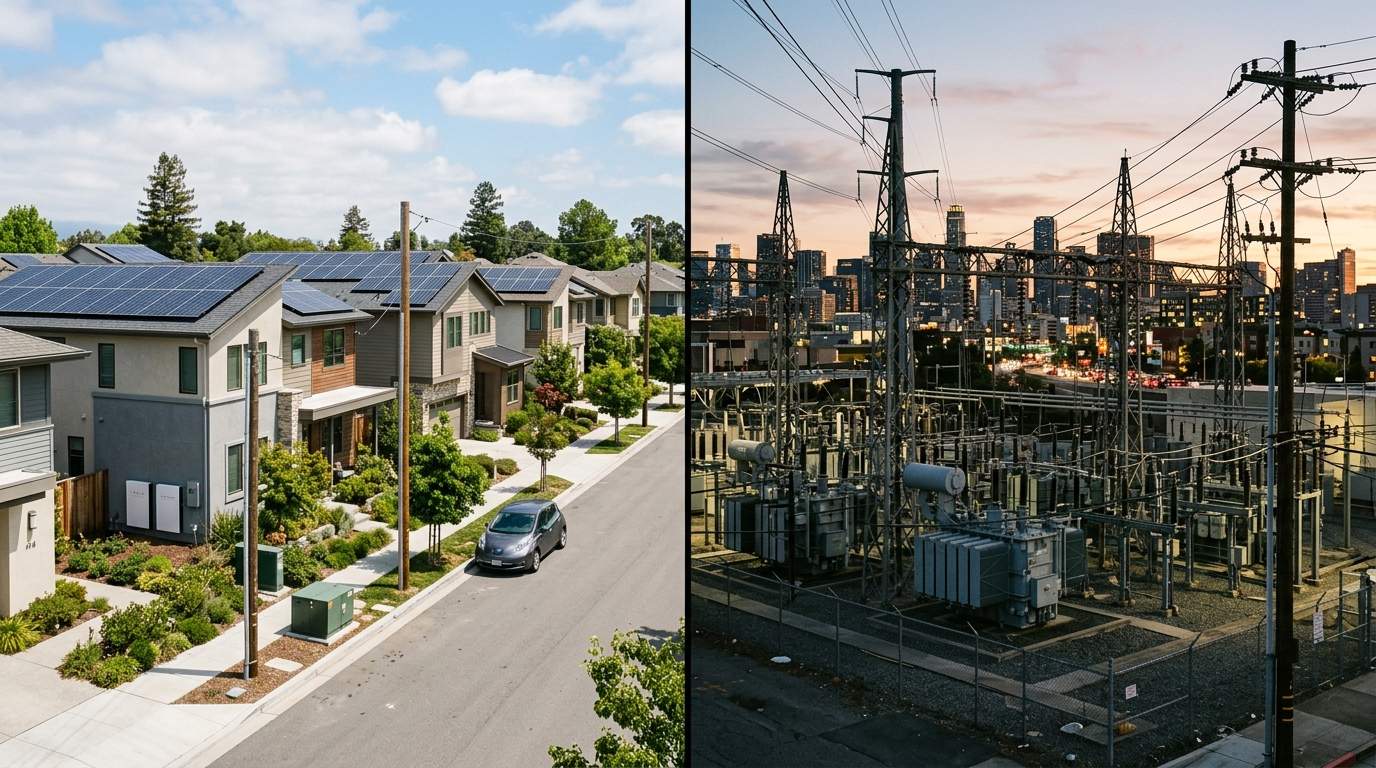
The sting of a higher electricity bill has become a recurring discomfort for many households, a predictable consequence of the increasing demands placed upon our aging energy infrastructure. Utility companies often present these rising costs as essential investments in "grid modernization" and the integration of renewable energy, framing them as crucial steps towards a resilient, sustainable future. Yet, a fundamental question lingers: are these soaring expenses genuinely paving the way for a democratized, future-proof energy system that benefits everyone, or are they primarily underwriting the capital interests of centralized power giants, subtly reinforcing an established monopoly under the guise of progress? This escalating expenditure, often justified by complex technical needs, presents a profound cognitive gap between the narrative of collective investment and the individual burden of rising costs.
E.g. :Your Wi-Fi Extender's Secret: Is It Sabotaging Your Home Network?
- 1、The Unyielding Climb of Utility Rates
- 2、Centralized Ambition vs. Distributed Disruption
- 3、The Cost-Benefit Imbalance: Who Truly Profits from Grid Modernization?
- 4、Accelerating Innovation or Slow-Walking Progress?
- 5、Navigating the Future: A Call for Energy Equity and Transparency
The Unyielding Climb of Utility Rates
Consumers globally are grappling with consistently increasing electricity bills, often accompanied by the unsettling reality of unreliable service, particularly during extreme weather events. The official explanation typically centers on the imperative to upgrade decades-old infrastructure, which ranges from vulnerable transmission lines to outdated substations, alongside the significant undertaking of integrating intermittent renewable sources like solar and wind power. These are not trivial challenges, and the need for investment is undeniable, but the allocation and impact of these funds remain opaque, leaving consumers feeling powerless and uninformed about the true trajectory of their energy future.
The Imperative for Grid Resilience
The increasing frequency and intensity of climate-related disruptions—from record-breaking heatwaves to severe winter storms—have exposed critical vulnerabilities in our conventional grid. Utilities argue, with some justification, that strengthening this infrastructure is paramount for maintaining service stability, a basic expectation for modern life. This involves fortifying physical assets, improving storm response, and enhancing the overall robustness against external shocks.
Centralized Ambition vs. Distributed Disruption
For generations, the power sector has operated on a centralized model: large power plants generating electricity, which is then transmitted over vast distances to consumers. The industry consensus, often promoted by utilities and regulators, champions large-scale, centralized infrastructure investments, funded by ratepayers, as the most efficient path to a decarbonized and reliable grid. In this view, distributed energy resources (DERs) like rooftop solar and home batteries are seen as supplementary, niche additions rather than foundational elements.
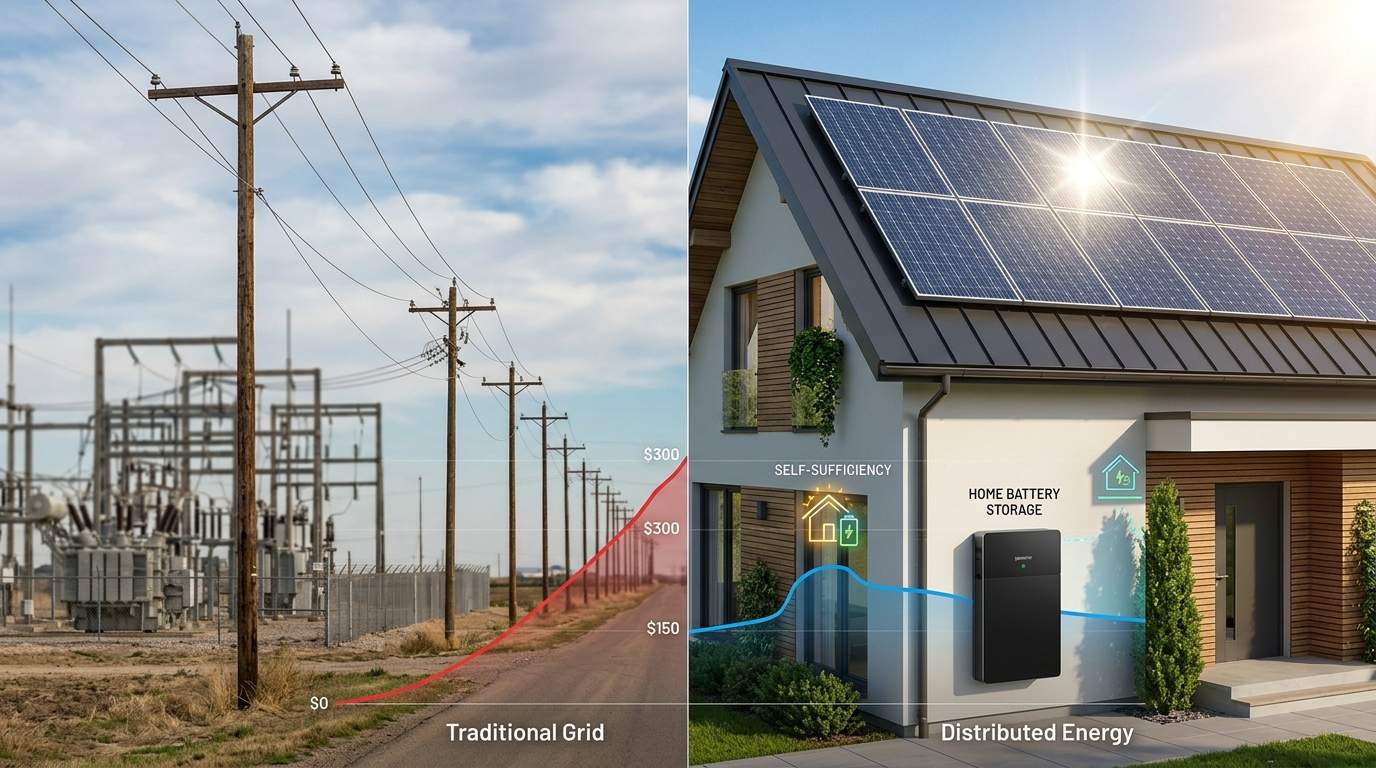
However, a parallel, more disruptive vision is rapidly gaining traction. This perspective posits that the future of energy lies in decentralization, empowering individual consumers and communities to generate, store, and manage their own power. Technologies such as residential solar photovoltaic systems, advanced battery storage, and electric vehicles (EVs) capable of vehicle-to-grid (V2G) functionality are transforming passive consumers into active "prosumers," challenging the very premise of the traditional utility monopoly.
What Defines a Modern Grid?
Beyond just physical wires and transformers, a truly modern grid—often termed a "smart grid"—is deeply digitalized. It incorporates advanced sensors, real-time communication networks, and artificial intelligence to monitor, control, and optimize electricity flow in a two-way fashion. This enables greater efficiency, quicker fault detection, and the dynamic balancing of supply and demand, including variable renewable energy.
The Promise of Localized Resilience
One of the most compelling arguments for decentralized energy is the enhanced resilience it offers. Localized microgrids, for instance, can operate independently from the main grid, providing power to critical facilities or entire communities during widespread outages. Furthermore, virtual power plants (VPPs) aggregate the capacity of numerous DERs across various locations, managing them collectively to provide grid services, effectively turning individual assets into a robust, collective resource. These models offer a pathway to energy stability that is less vulnerable to single points of failure inherent in centralized systems.
The Cost-Benefit Imbalance: Who Truly Profits from Grid Modernization?
The financing of grid modernization projects typically falls on the ratepayer. Utility companies, often operating as regulated monopolies, are generally allowed to recover capital expenditures through increased rates, ensuring a guaranteed return on investment for their shareholders. This creates an "asymmetry of interests," where utility profits and asset ownership can inadvertently be prioritized over consumer energy independence and potentially lower long-term costs.
This situation can feel like a "digital shackle" around the necks of users. While the infrastructure ostensibly improves, the underlying structure of energy provision remains unchanged, leaving consumers dependent on a single provider and subject to its pricing decisions. Rather than fostering a truly competitive and agile energy market, current rate structures might, in effect, slow-walk the widespread adoption of technologies that could genuinely democratize power and reduce dependence on centralized providers.
Accelerating Innovation or Slow-Walking Progress?
The debate over grid modernization isn't merely technical; it's an economic and philosophical one concerning the pace and direction of energy innovation. Are utility investments genuinely accelerating the adoption of truly transformative energy solutions, or are they subtly designed to maintain existing infrastructure and business models, adapting incrementally rather than fundamentally transforming? The slow integration of net metering policies in some regions or the reluctance to adequately compensate homeowners for exporting excess solar power back to the grid are often cited as examples of this systemic inertia.
Navigating the Future: A Call for Energy Equity and Transparency
Achieving a sustainable, resilient, and equitable energy future demands a critical re-evaluation of how utility investments are funded, governed, and ultimately benefit society. It requires regulatory frameworks that not only allow but actively incentivize utilities to embrace and integrate distributed energy resources, prioritizing genuine energy equity and consumer empowerment. This means moving beyond a sole focus on large-scale infrastructure and exploring policies that support local microgrids, homeowner battery storage, and transparent pricing mechanisms that reflect the true value of decentralized contributions to grid stability.
The rising power bill should not merely be a payment for propping up yesterday's monopoly, but a transparent investment in a future where energy is democratized, resilient, and truly serves the interests of every citizen. It's time to demand clarity on how these funds are allocated and ensure they build a truly modern grid that liberates, rather than shackles, the energy consumer.