
Imagine stepping outside into a neighborhood where every rooftop gleams with solar panels, where community batteries hum softly, collectively powering homes and even selling excess energy back to a vibrant, shared local grid. This vision, seemingly within our technological grasp, promises lower bills, energy independence, and a resilient power supply. Yet, for many, this future remains frustratingly out of reach: electricity bills continue their upward climb, and utilities still issue warnings of instability during peak demand, despite a growing investment in personal clean energy. Why, in an era of unprecedented technological advancement, does the energy future that feels so intuitively right to us seem perpetually just beyond the horizon, often becoming more expensive rather than less?
E.g. :Algorithms of Exclusion: Is Your Digital Footprint Silently Judging Your Future?
- 1、The Promise and the Paradox of Distributed Energy Resources
- 2、Grid Modernization: A Path to Resilience or a Regulatory Maze?
- 3、Utility Profit Models: Centralized Legacy vs. Decentralized Future
- 4、Energy Storage Adoption: The Key to a Flexible Grid, Held Back?
- 5、Bridging the Divide: Towards a Truly Smart and Equitable Grid
The Promise and the Paradox of Distributed Energy Resources
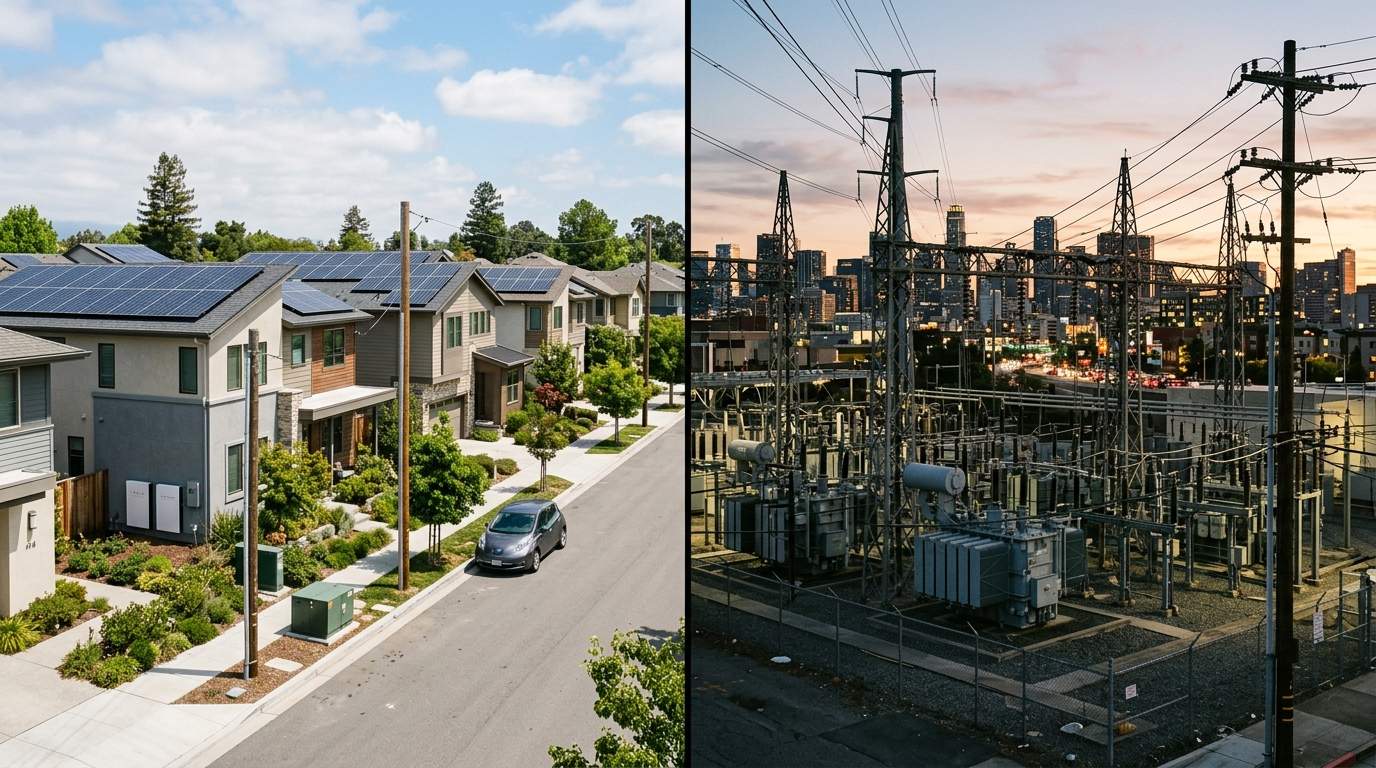
At its core, the concept of Distributed Energy Resources (DERs) champions a decentralized approach to power generation. Rather than relying solely on large, centralized power plants, DERs like rooftop solar arrays, home battery storage systems, and even electric vehicles capable of bidirectional charging (V2G) allow individual homes and businesses to generate, store, and even share their own electricity. The inherent promise is profound: reducing reliance on fossil fuels, enhancing local grid resilience against outages, and theoretically, driving down energy costs through self-sufficiency and localized sharing. For instance, a community equipped with solar and storage can form a "microgrid," capable of disconnecting from the main grid during an emergency and operating autonomously, ensuring essential services remain online.
Unraveling Net Metering and Its Economic Implications
Central to the economic viability of DERs for many consumers has been net metering. This policy traditionally allowed solar panel owners to receive bill credits for excess electricity sent back to the grid, often at the full retail rate. It was a simple, elegant mechanism that incentivized solar adoption. However, this straightforward exchange is rapidly evolving, often to the detriment of homeowners. Utilities, citing concerns about cost shifts to non-solar customers and their own revenue stability, are increasingly advocating for and implementing "net metering reform." These reforms frequently reduce the compensation rate for exported power, introduce new fixed charges, or shift to less favorable "buy-back" rates, fundamentally altering the financial calculus for installing solar and significantly extending the payback period on what was once a clear investment.
Grid Modernization: A Path to Resilience or a Regulatory Maze?
Integrating millions of individual power generators and storage units requires a profoundly modernized grid. This isn't just about replacing old wires; it's about intelligent, two-way communication, advanced sensors, and sophisticated software that can manage the ebb and flow of power from diverse sources. Technologies like Virtual Power Plants (VPPs) — where an aggregation of DERs (solar, batteries, smart thermostats) are collectively controlled to provide grid services — and microgrids are foundational to this future. They offer dynamic flexibility and enhanced resilience. However, the path to widespread adoption is often obscured by a labyrinthine regulatory landscape. Utilities, accustomed to a one-way power flow, often struggle with or actively resist the complexities of managing a truly bidirectional, decentralized system, leading to slow adoption rates and missed opportunities for innovation.
The Hidden Costs of Connecting: Interconnection Hurdles
Even when customers are eager to connect their DERs, they often encounter significant interconnection hurdles. These are the technical and administrative requirements that dictate how a solar array or battery system safely links to the existing electricity grid. What should be a standardized, straightforward process can become incredibly complex and costly, requiring extensive studies, specialized equipment upgrades, and lengthy approval timelines. These hidden costs and bureaucratic delays act as a formidable barrier, subtly discouraging potential DER adopters and slowing down the transition to a more decentralized and resilient energy infrastructure.
Utility Profit Models: Centralized Legacy vs. Decentralized Future
The fundamental tension driving this slow transition lies squarely in traditional utility profit models. For decades, utilities have operated as regulated monopolies, earning a guaranteed rate of return on capital investments in large-scale infrastructure – power plants, transmission lines, and substations. This model inherently favors centralized generation. The rise of DERs, however, directly challenges this paradigm. When customers generate their own power, they buy less from the utility, reducing demand for the utility's high-capital assets and thereby potentially shrinking its revenue base. This creates a powerful financial incentive for utilities to protect their legacy business models, sometimes at the expense of accelerating a cleaner, more affordable energy future for their customers.
Energy Storage Adoption: The Key to a Flexible Grid, Held Back?
The full potential of distributed energy resources is unlocked by energy storage adoption, particularly through home and community batteries. Storage transforms intermittent renewables like solar into reliable, dispatchable power. It allows excess energy generated during the day to be used at night, smooths grid fluctuations, and is crucial for microgrid functionality and VPPs. Despite these undeniable benefits, widespread adoption of storage faces significant obstacles beyond just initial cost. Regulatory frameworks often lag, failing to properly value the grid services storage can provide, or creating disincentives for its deployment. This means communities with abundant solar might still struggle to leverage their energy efficiently, caught between the promise of continuous power and the limitations imposed by an evolving regulatory landscape.
Bridging the Divide: Towards a Truly Smart and Equitable Grid
The path forward demands a fundamental recalibration of priorities and policies. It requires moving beyond punitive net metering reforms towards equitable, market-based compensation for distributed generation and storage, recognizing their intrinsic value to the grid. Streamlining interconnection processes, fostering innovation in grid modernization technologies, and incentivizing utilities to partner with DER owners, perhaps through performance-based regulation that rewards resilience and decarbonization, are critical steps. Only by embracing a cooperative, technologically forward-thinking approach can we dismantle the "digital shackles" of outdated models and truly unlock the immense future dividends of a cheaper, greener, and more resilient power grid for everyone.