
You're launching an online store, or perhaps an indie developer pouring your soul into a passion project. The digital landscape promises unprecedented tools to bring your vision to life, yet every "best practices" guide or online tutorial seems to herald a new, intricate web framework—a "game-changer" that demands weeks of dedicated learning, only to be superseded by another, equally complex contender six months later. The very promise of "faster development" often feels like a distant, cruel mirage, leading to a profound sense of technological inertia rather than acceleration.
E.g. :Think Your Phone Is Slow? Unmasking the Upgrade Illusion.
- 1、The Siren Song of Speed: Unpacking Modern Web Frameworks
- 2、The Hidden Toll: Navigating the JavaScript Ecosystem's Digital Shackles
- 3、From Perpetual Learning to Professional Burnout: Redefining Developer Careers
- 4、The Lingering Legacy: Understanding Technical Debt in Our Disposable Code Culture
- 5、Towards Resilient Architectures: Building a Future of Sustainable Software Development
The Siren Song of Speed: Unpacking Modern Web Frameworks
The sheer velocity of innovation in modern web development, particularly within the JavaScript ecosystem, presents a fascinating duality. On one hand, frameworks emerge from genuine needs, aiming to abstract away complexity, standardize best practices, and offer reusable components that genuinely accelerate initial project setup. The creators and large tech companies behind these tools champion them as essential for progress, promising superior "Developer Experience" (DX) and robust solutions for scaling intricate applications.
The Allure of "Developer Experience" (DX) in Web Development
This focus on DX is not entirely without merit. A well-designed framework can indeed streamline workflows, reduce boilerplate code, and foster consistency across large teams, leading to more maintainable codebases for established enterprises. The appeal of a vibrant community, extensive documentation, and a rich ecosystem of pre-built components can significantly lower the barrier to starting a project, enabling rapid prototyping and quicker iterations. Yet, this initial velocity often masks deeper, structural issues that disproportionately impact those outside the walled gardens of well-funded corporations.
The Hidden Toll: Navigating the JavaScript Ecosystem's Digital Shackles
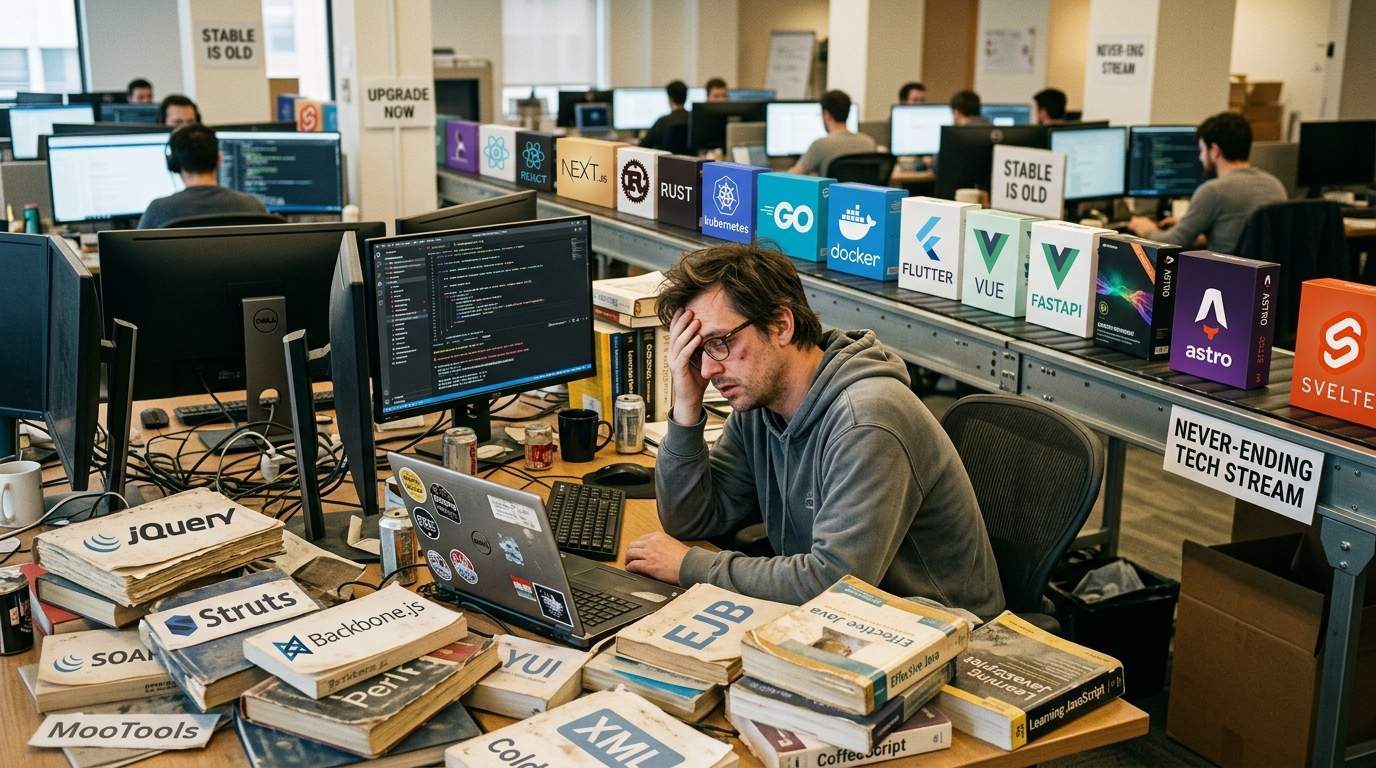
Beneath the glossy veneer of innovation lies a pervasive problem of "framework churn"—the rapid succession and frequent obsolescence of web development tools. This relentless cycle is quietly forging "digital shackles" around the necks of small businesses and independent creators. The constant pressure to adopt the latest framework translates directly into inflated development costs, as teams must either continuously reskill or hire expensive specialists to maintain ever-evolving tech stacks.
The Burden on Small Businesses and Independent Creators
For a small business, this often means diverting precious capital from product development or marketing into endless cycles of refactoring or migrating away from outdated dependencies. An application built with a popular framework today could become a liability tomorrow if its ecosystem stagnates or a new "paradigm shift" dictates a complete rebuild. This instability erodes the ability to build stable, long-term digital products without significant financial risk, turning what should be a strategic investment into a speculative gamble.
From Perpetual Learning to Professional Burnout: Redefining Developer Careers
The impact extends far beyond the balance sheet, directly threatening the sustainability of developer careers. The ideal of the "full-stack developer"—a versatile generalist capable of handling both front-end and back-end complexities—is becoming an increasingly elusive myth. Instead, the framework factory often demands hyper-specialization, pushing developers into narrow, volatile niches that require continuous, exhausting reskilling.
This constant chase for the "next big thing" contributes significantly to widespread developer burnout and career anxiety. The mental overhead of keeping pace with ever-shifting APIs, build tools, and architectural patterns saps creative energy and diminishes the joy of building. Agility for framework creators and large corporations, who can afford dedicated teams for migration and exploration, often translates into atrophy for individual developers struggling to maintain relevance and stability in their professional lives.
The Lingering Legacy: Understanding Technical Debt in Our Disposable Code Culture
The ephemeral nature of many frameworks fosters a "disposable code" culture, where the long-term maintainability and resilience of software take a backseat to immediate development speed. This approach accumulates significant "technical debt"—not just in poorly written code, but in the structural choices that bind projects to specific, rapidly evolving ecosystems. Migrating away from a deprecated framework, or even updating major versions, can be a monumental task, consuming resources equivalent to building a new application from scratch.
This digital debt isn't just about lines of code; it represents a profound drag on future innovation. Projects become brittle, difficult to extend, and expensive to secure, turning once-agile systems into cumbersome legacy applications within a few short years. The long-term "dividends" of truly sustainable software—stability, security, and adaptability—are sacrificed on the altar of short-term, perceived velocity.
Towards Resilient Architectures: Building a Future of Sustainable Software Development
To break free from this cycle, we must shift our focus from chasing the latest framework trend to cultivating resilience in our software architectures. The true "future dividends" lie not in fleeting tools, but in foundational principles: a deep understanding of core web standards (HTML, CSS, JavaScript), robust architectural patterns, and a commitment to longevity over novelty. Investing in stable, well-maintained libraries with strong community backing and clear deprecation policies offers a more sustainable path than constantly rebuilding on shifting sands.
This isn't to say innovation should cease, but rather that it should be balanced with a conscious effort towards creating enduring value. Prioritizing interoperability, embracing progressive enhancement, and fostering a culture of thoughtful technology adoption will empower independent creators and small businesses to build digital assets that stand the test of time, rather than becoming relics of a forgotten framework.
The relentless pace of framework innovation, while seemingly designed for progress, often exacts a heavy toll on individuals and small enterprises, generating digital shackles rather than true liberation. The path forward demands a re-evaluation of what constitutes genuine "progress"—prioritizing longevity, foundational understanding, and sustainable practices to foster a more resilient and equitable digital future.