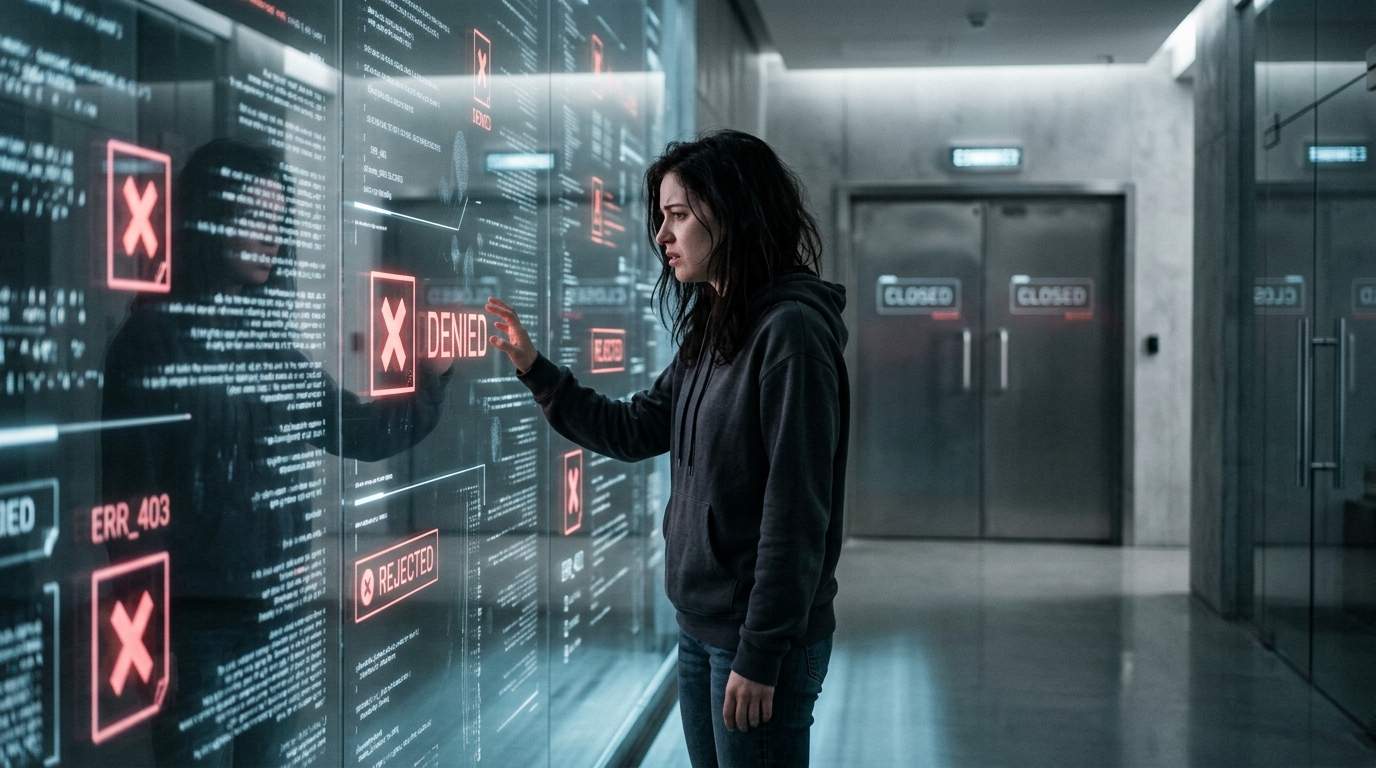
Across industries, the narrative surrounding Generative AI often frames it as an empowering "co-pilot," a tool designed to democratize creation and accelerate human ingenuity. Yet, for many human creators, this technological leap carries a profound and unsettling tension. Imagine a freelance graphic designer, dedicated to cultivating a unique signature style over years, only to discover an AI art generator producing strikingly similar images – a digital echo of their life's work. The unsettling truth often surfaces with the realization: their entire online portfolio, meticulously crafted and shared, was scraped and used as training data without consent or compensation. This isn't just a minor inconvenience; it's an existential threat to their livelihood, as an algorithm now offers comparable output at a fraction of their fee.
E.g. :Cloud's Golden Handcuffs: How Hyperscalers Monetize Your Data While Your Digital Bills Rise
- 1、The Unseen Harvest: How AI Models Learn
- 2、Devaluing Originality: The Economic Shadow of AI
- 3、Redefining Authorship: Who Owns the AI-Generated Work?
- 4、Navigating the Labyrinth: AI Copyright Infringement and Fair Use
- 5、The Future of Creation: Towards an Equitable AI Dividend
The Unseen Harvest: How AI Models Learn
The foundational premise of Generative AI's impressive capabilities lies in its insatiable appetite for data. These powerful algorithms, often developed by technology giants, are trained on colossal datasets comprising billions of images, texts, audio files, and more, all sourced from the internet. This process, often termed "intellectual property scraping," involves systematically collecting vast amounts of human-created content to teach the AI patterns, styles, and concepts. It's an unprecedented digital harvest, largely unseen and uncompensated, forming the bedrock of systems that then replicate and remix human creativity.
The Scramble for Data: Training the Giants
The sheer scale of data ingestion required to build state-of-the-art Generative AI models is staggering, often encompassing much of the publicly accessible internet. Without clear legal or ethical frameworks guiding this process, a significant portion of this data is appropriated without explicit permission from original creators. For the graphic designer, every pixel, brushstroke, and design choice they ever shared online became a data point, feeding a machine that learned their distinct creative language, effectively turning their portfolio into a free training manual for a future competitor.
Devaluing Originality: The Economic Shadow of AI
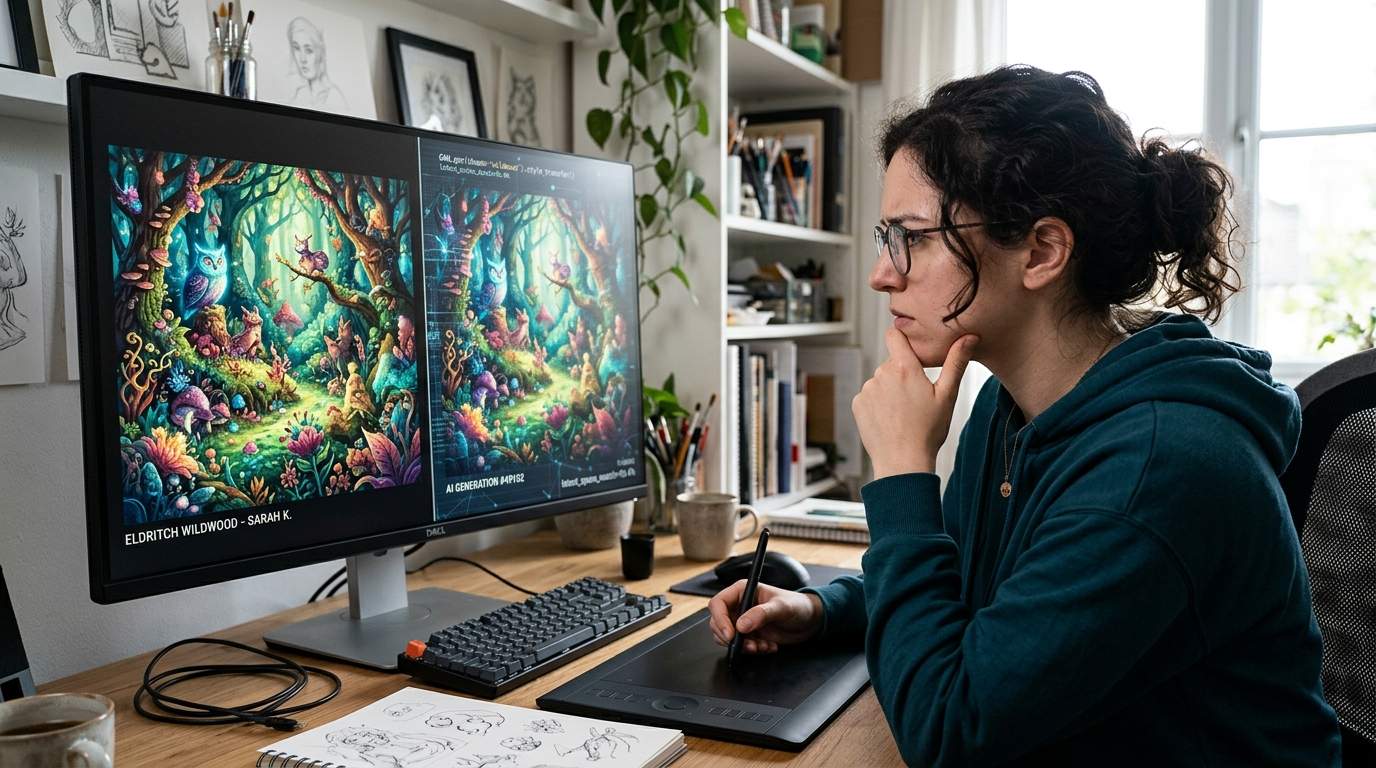
While tech companies champion Generative AI as a force for innovation, for millions of human creators—from artists and writers to musicians and coders—it often feels like an existential threat. The uncompensated appropriation of their intellectual property for training sophisticated AI models inevitably leads to a market devaluation of original human creative work. This creates a stark "AI dividend" for technology giants who leverage these models for profit, while human creators face an "AI debt" of devalued skills, lost income, and diminished cultural authenticity.
Redefining Authorship: Who Owns the AI-Generated Work?
The emergence of AI-generated content also throws a complex wrench into long-standing notions of authorship and ownership. When an AI produces an image "in the style of" a human artist, using data gleaned from that artist's entire body of work, where does originality reside? The lines blur significantly, challenging the very definition of creative contribution. If an AI can perfectly mimic a unique signature style, does the AI become a co-author, or merely a sophisticated tool, and if the latter, who then owns the output?
Blurring Lines: AI's 'Style' and Human Legacy
This challenge is particularly acute when AI models learn not just concepts, but specific artistic styles that are the hallmarks of individual creators. The graphic designer's unique blend of color theory, composition, and thematic elements, painstakingly developed over years, can now be algorithmically replicated. This raises profound questions about the long-term impact on artistic legacies and the potential for a future where distinct human styles become generic algorithms, diluted and detached from their original human source.
Navigating the Labyrinth: AI Copyright Infringement and Fair Use
Existing copyright law, designed for a pre-digital, pre-AI era, struggles to provide clear answers to these contemporary challenges. A central point of contention revolves around the legal concept of "transformative use." Proponents of AI model training argue that ingesting copyrighted material to train an AI, which then generates new content, constitutes a "transformative" act, thereby falling under fair use provisions. However, opponents argue that such transformation is far from fair when it directly undermines the economic viability and ownership rights of the original human source material.
There is currently no clear legal or ethical framework for restitution or equitable benefit sharing for creators whose work forms the backbone of these AI systems. Courts globally are grappling with these novel cases, and the outcomes will shape the future of creative industries. The absence of an established legal precedent leaves a vast ethical vacuum, allowing for the widespread, unconsented, and uncompensated appropriation of human intellectual property to continue largely unchecked.
The Future of Creation: Towards an Equitable AI Dividend
The path forward requires a re-evaluation of our digital ethics and a proactive approach to establishing robust frameworks that protect human creativity while fostering technological progress. We need solutions that ensure Generative AI genuinely augments human potential rather than systematically undermining it. This includes exploring mechanisms for consent-based data usage, fair compensation models, and clear attribution for creators whose work contributes to AI training.
Envisioning a future where AI acts as a true "co-pilot" means developing systems that are not just technically advanced but also ethically grounded. It necessitates a shift towards models that prioritize human agency, protect intellectual property, and share the immense "AI dividend" more equitably with the creators who fuel its intelligence. Only then can we ensure that the digital revolution truly democratizes creativity, rather than imposing new digital shackles on those who create. The promise of AI remains profound, but its ethical deployment will define whether it leads to a flourishing creative dawn or a silent, irreversible dusk for human ingenuity.